
设计简介
功能梯度材料有限元力学分析
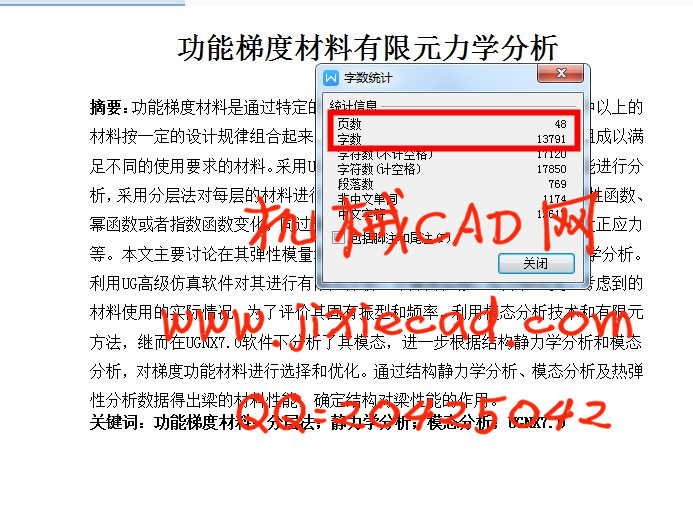
摘要:功能梯度材料是通过特定的材料制备工艺将不同性能的两种或两种以上的材料按一定的设计规律组合起来,使结构的两侧分别由性能各异的材料组成以满足不同的使用要求的材料。采用UG软件对功能梯度材料的结构静力学性能进行分析,采用分层法对每层的材料进行定义,使其的弹性模量、质量密度呈线性函数、幂函数或者指数函数变化,同过施加不同的载荷分析它的变形位移,最大正应力等。本文主要讨论在其弹性模量和质量密度呈线性函数变化时,它的力学分析。利用UG高级仿真软件对其进行有限元分析,计算其位移,应力和应变。考虑到的材料使用的实际情况,为了评价其固有振型和频率,利用模态分析技术和有限元方法,继而在UGNX7.0软件下分析了其模态,进一步根据结构静力学分析和模态分析,对梯度功能材料进行选择和优化。通过结构静力学分析、模态分析及热弹性分析数据得出梁的材料性能,确定结构对梁性能的作用。
关键词:功能梯度材料;分层法;静力学分析;模态分析;UGNX7.0
FGM finite element mechanical analyzed
Abstract :FGM material through the preparation of specific properties of the different two or more materials according to certain design rules in combination, on both sides of the structure of a material different from the performance to meet different requirements of material. UG software using the structure of FGM static performance analysis, Stratified method to define each of the material. So that the elastic modulus, a linear mass density function of an exponential function or a power, By applying different loads analyze its deformation displacement, maximum normal stress. This article focuses on the elastic modulus and the linear mass density varies as a function, its mechanical analysis. Advanced simulation software using UG its finite element analysis to calculate the displacement, stress and strain. Taking into account the actual situation of use of materials, In order to evaluate the natural modes and frequencies, Modal analysis and finite element method. Then in UG NX7.0 software to analyze its modal, further analysis based on structural statics and modal analysis, functionally gradient materials selection and optimization.
Keyword: Functionally graded materials; Laminography; Statics analysis; Modal Analysis; UGNX7.0
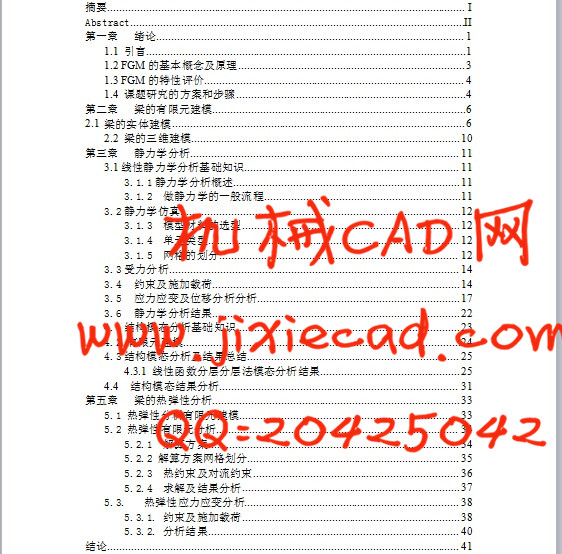
目录
摘要 I
Abstract II
第一章 绪论 1
1.1 引言 1
1.2 FGM的基本概念及原理 3
1.3 FGM的特性评价 4
1.4 课题研究的方案和步骤 4
第二章 梁的有限元建模 6
2.1 梁的实体建模 6
2.2 梁的三维建模 10
第三章 静力学分析 11
3.1线性静力学分析基础知识 11
3.1.1静力学分析概述 11
3.1.2 做静力学的一般流程 11
3.2静力学仿真 12
3.1.3 模型材料的选型 12
3.1.4 单元类型 12
3.1.5 网格的划分 12
3.3受力分析 14
3.4 约束及施加载荷 14
3.5 应力应变及位移分析分析 17
3.6 静力学分析结果 22
4.1结构模态分析基础知识 23
4.2 有限元建模 24
4.3结构模态分析及结果总结 25
4.3.1 线性函数分层分层法模态分析结果 25
4.4 结构模态结果分析 31
第五章 梁的热弹性分析 33
5.1 热弹性分析有限元建模 33
5.2 热弹性有限元分析 34
5.2.1 解算方案 34
5.2.2 解算方案网格划分 35
5.2.3 热约束及对流约束 36
5.2.4 求解及结果分析 37
5.3. 热弹性应力应变分析 38
5.3.1. 约束及施加载荷 38
5.3.2. 分析结果 40
结论 41
致谢 42
参考文献 43
摘要:功能梯度材料是通过特定的材料制备工艺将不同性能的两种或两种以上的材料按一定的设计规律组合起来,使结构的两侧分别由性能各异的材料组成以满足不同的使用要求的材料。采用UG软件对功能梯度材料的结构静力学性能进行分析,采用分层法对每层的材料进行定义,使其的弹性模量、质量密度呈线性函数、幂函数或者指数函数变化,同过施加不同的载荷分析它的变形位移,最大正应力等。本文主要讨论在其弹性模量和质量密度呈线性函数变化时,它的力学分析。利用UG高级仿真软件对其进行有限元分析,计算其位移,应力和应变。考虑到的材料使用的实际情况,为了评价其固有振型和频率,利用模态分析技术和有限元方法,继而在UGNX7.0软件下分析了其模态,进一步根据结构静力学分析和模态分析,对梯度功能材料进行选择和优化。通过结构静力学分析、模态分析及热弹性分析数据得出梁的材料性能,确定结构对梁性能的作用。
关键词:功能梯度材料;分层法;静力学分析;模态分析;UGNX7.0
FGM finite element mechanical analyzed
Abstract :FGM material through the preparation of specific properties of the different two or more materials according to certain design rules in combination, on both sides of the structure of a material different from the performance to meet different requirements of material. UG software using the structure of FGM static performance analysis, Stratified method to define each of the material. So that the elastic modulus, a linear mass density function of an exponential function or a power, By applying different loads analyze its deformation displacement, maximum normal stress. This article focuses on the elastic modulus and the linear mass density varies as a function, its mechanical analysis. Advanced simulation software using UG its finite element analysis to calculate the displacement, stress and strain. Taking into account the actual situation of use of materials, In order to evaluate the natural modes and frequencies, Modal analysis and finite element method. Then in UG NX7.0 software to analyze its modal, further analysis based on structural statics and modal analysis, functionally gradient materials selection and optimization.
Keyword: Functionally graded materials; Laminography; Statics analysis; Modal Analysis; UGNX7.0
目录
摘要 I
Abstract II
第一章 绪论 1
1.1 引言 1
1.2 FGM的基本概念及原理 3
1.3 FGM的特性评价 4
1.4 课题研究的方案和步骤 4
第二章 梁的有限元建模 6
2.1 梁的实体建模 6
2.2 梁的三维建模 10
第三章 静力学分析 11
3.1线性静力学分析基础知识 11
3.1.1静力学分析概述 11
3.1.2 做静力学的一般流程 11
3.2静力学仿真 12
3.1.3 模型材料的选型 12
3.1.4 单元类型 12
3.1.5 网格的划分 12
3.3受力分析 14
3.4 约束及施加载荷 14
3.5 应力应变及位移分析分析 17
3.6 静力学分析结果 22
4.1结构模态分析基础知识 23
4.2 有限元建模 24
4.3结构模态分析及结果总结 25
4.3.1 线性函数分层分层法模态分析结果 25
4.4 结构模态结果分析 31
第五章 梁的热弹性分析 33
5.1 热弹性分析有限元建模 33
5.2 热弹性有限元分析 34
5.2.1 解算方案 34
5.2.2 解算方案网格划分 35
5.2.3 热约束及对流约束 36
5.2.4 求解及结果分析 37
5.3. 热弹性应力应变分析 38
5.3.1. 约束及施加载荷 38
5.3.2. 分析结果 40
结论 41
致谢 42
参考文献 43