
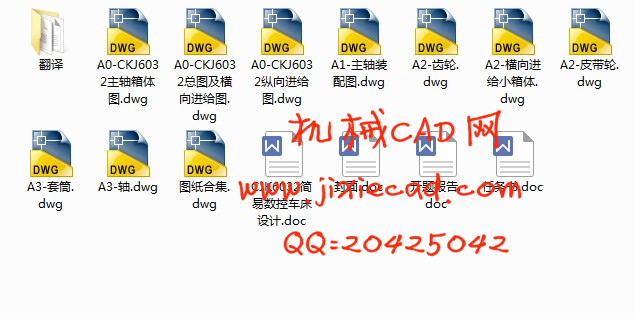
设计简介
摘 要
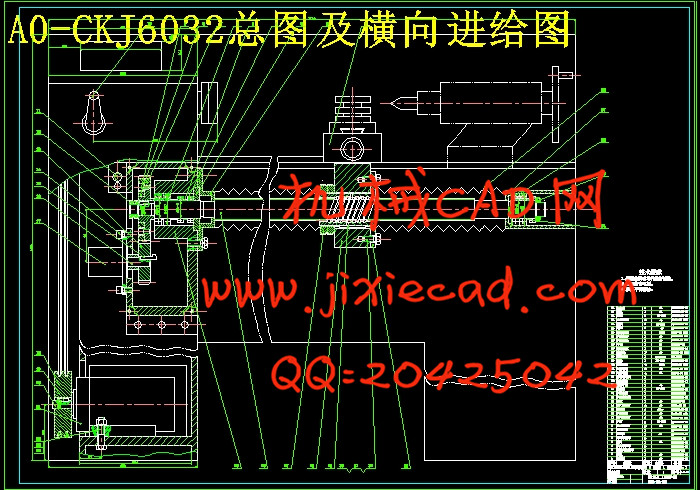
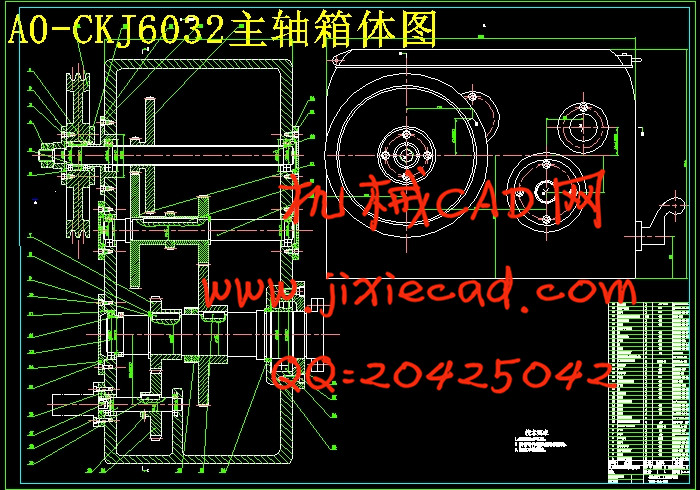
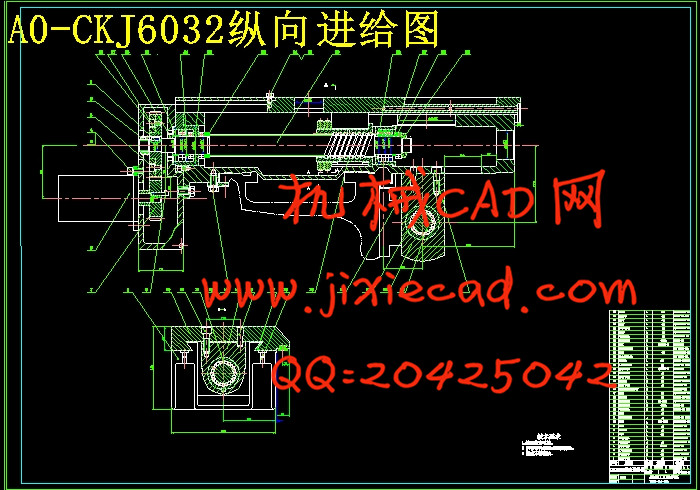
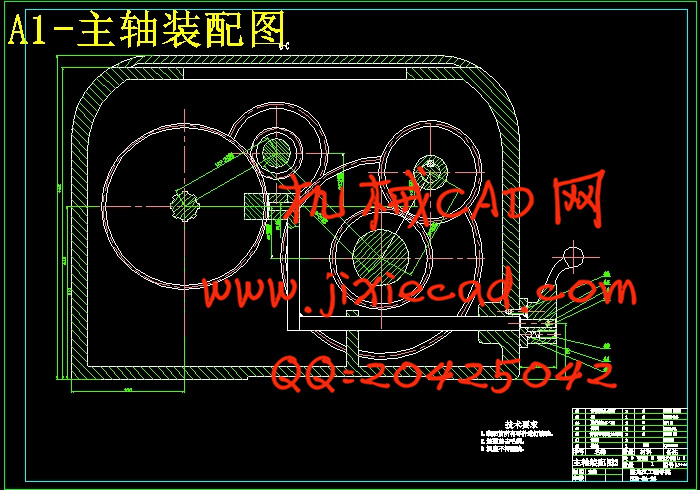
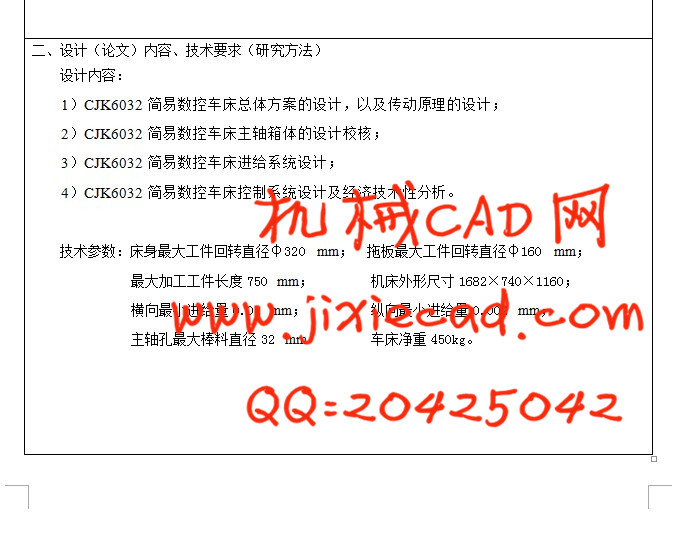
本次设计课题是CJK6032简易数控车床。数控机床是典型的机电一体化产品,该产品在加工一些普通零件时比一般车床快捷,方便,加工效率高,产品质量好,能很大程度上提高产品的市场竞争能力。
CJK6032主要是由传动系统,进给系统和控制系统三部分组成。对其传动系统设计时,先进行总体方案的确定,画出简易的传动系统图。再根据给定的设计参数来确定传动和进给系统。滚珠丝杠由步进电机来驱动,从而实现进给系统的进给。步进电机由控制系统来驱动。控制系统是由键盘,显示,变频器,脉冲发生器和电机驱动部分组成。CJK6032是无级调速的,由电动机加变频器来实现。最后通过技术经济分析,验证了设计生产该产品是经济合理的。
关键词:数控;车床;变频器;滚珠丝杠;无级调速
ABSTRACT
The subject of design is the simple NC CJK6032-lathe. The numerical control engine bed is the typical mechatronic product. Compared to products which are produced by the tradition engine bed, the products which are produced by NC lathe-CJK6032 are more efficient, and the quality of the products is usually better. All of this can enhance the capacity of competition of the products.
The simple NC CJK6032-lathe is composed of drive system, feed system and control system. When designing drive system, the diagram of simple drive system are specified. Then the drive and feed system are designed according to the given design parameter. The feed system is working with the assistance of ball screw. The steped motor drove by control system is drove by ball screw. Control system consists of keyboard, display, frequency converter, pulsar and motor drive.The simple NC CJK6032-lathe has variable speed which is accomplished by motor and frequency converter. In the end, the analysis on economic prove its reasonable to produce to CJK6032-lathe.
Key words: Numerically Controlled;Lathe;Frequency Converter;Ball Screw;Variable Speed
目 录
摘要 I
Abstract II
第1章 绪论 1
1.1课题研究的背景目的和意义 1
1.2我国数控技术的现状及发展趋势 4
1.3.1对我国数控技术及其产业发展的基本估计 4
1.3.2对我国数控技术和产业化发展的战略思考 5
1.3设计的主要内容 6
第2章 总体方案设计 7
2.1 设计参数 7
2.2总体方案的确定 7
2.3 传动原理 9
2.4 基本参数的确定 10
2.5 本章小结 11
第3章 传动设计 12
3.1 设计参数 12
3.2 减速齿轮设计及校核 12
3.3 带轮及带的计算 16
3.4 轴的初步确定 18
3.5 轴的校核 19
3.6 键的校核 22
3.7 本章小结 22
第4章 进给系统设计 23
4.1纵向进给丝杠设计 23
4.1.1 滚动螺旋传动工作原理 23
4.1.2 丝杠设计计算 23
4.2 横向进给丝杠设计 25
4.3 步进电机的选择 26
4.3.1步进电机的工作原理 26
4.3.2 步进电机的选取 28
4.4 本章小结 30
第5章 控制原理设计 31
5.1 数控系统基本硬件组成 31
5.2 步进电机的控制 31
5.2.1 步进电机的控制原理 31
5.2.2 步进电机的控制 31
5.2.4 键盘显示器接口 32
5.2.5 程序存储器(EEPROM)芯片 33
5.3 本章小结 33
第6章 经济技术分析 34
结论 38
参考文献 39
致谢 40