

设计简介
摘 要
储罐广泛应用于石油化工行业。作为关键生产设备,储罐长期工作于恶劣工况下,易发生泄漏,不仅造成经济损失,对生态环境也会造成伤害。为确保储罐安全运营,有必要研究储罐检测方法。目前,对储罐检测一般采取开罐检测方法,需要停产、倒罐,存在检测辅助周期长、费用高的缺点。本学位论文结合国家质检行业公益专项项目“承压设备漏磁检测关键技术研究和设备与标准研制”,深入研究了储罐底板漏磁检测方法,开发了适用于不开罐的在油储罐底板漏磁检测器。
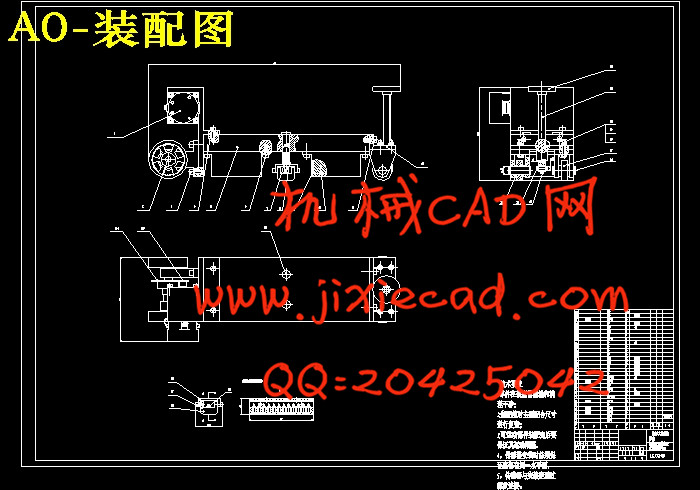
首先给出了储罐底板漏磁检测器的整体结构。通过ug建立了检测器的三维模型,对储罐底板漏磁检测方法进行了研究,获取了磁化器尺寸与漏磁信号强度之间的关系,得到了漏磁检测器的理论仿真信号,为检测器的研制奠定了理论基础。其次,为满足储罐底板在油检测要求,在对比分析常用动、静密封技术的基础上,设计了适用于油性环境中进行检测的密封结构。并根据检测器实际工作状况和性能要求建立了有限元虚拟样机,对检测器的动力学特性以及机构强度进行了计算和仿真分析。最后,在上述理论研究和分析的基础上,研制开发了储罐底板漏磁检测器。搭建了实验平台,基于实验室环境对检测器的实际检测能力进行了测试,并与理论信号进行了对比。结果表明:检测器能够准确检测出20%深的模拟腐蚀坑缺陷,满足相关标准规范。
要求,且运动性能可靠、密封性能良好,具有良好的应用前景。
关键词:储罐 漏磁检测 在油检测 磁化器.
Abstract
Storage tanks are widely used in chemical or petrochemical industry. As a key componentof the productive process, storage tanks are often working under perishing conditions, whichleads to stored material leakage, causing economical loss as well as environmentalcontamination. To ensure safe operation of storage tanks, research on storage tank testingmethod is of great importance. Currently, storage tanks are tested by methods that requireemptying process which brought the disadvantages of long detection period and high testcosts. Supported by National Quality Inspection Technology of special, this thesis gives athorough research into MFL (magnetic flux leakage) storage tank floor testing method, anddeveloped in-oil MFL storage tank floor tester that requires no emptying process.Firstly, the integral structure of the storage tank floor tester is given out. Established a 3Dfinite element model under ANSYS software condition and carry on research on magnetic flux leakage test method on storage floor, obtained the relationship between physicaldimension of the tester and signal strength, and gives out theoretical simulated signal of thetester, laid foundation of the development of the tester. Secondly, to meet the demands of in-oil storage tank test, designed sealing structure which has oil environment adaptability for the tester on basis of comparison of conventional sealing method. And a virtual prototype according to the real condition of the tester andrequirements of its moving capability is established, to make analysis for its mechanicalstrength and moving capability through simulation and calculation.At last, on the basis of the above theoretical research and analysis, the MFL tester forstorage tank floor is developed. The experiment platform is set up.on basis of laboratoryconditions and examined the detection capability of the tester, compared the test signal andtheoretical simulated signal. Result indicates that the tester can precisely detected simulatedcorrosion pit of 20% thick loss and has reliable performance on moving capability and sealingcapability, which meets the requirements of associate testing standard and exhibits a bright储罐广泛应用于石油化工行业。作为关键生产设备,储罐长期工作于恶劣工况下,易发生泄漏,不仅造成经济损失,对生态环境也会造成伤害。为确保储罐安全运营,有必要研究储罐检测方法。目前,对储罐检测一般采取开罐检测方法,需要停产、倒罐,存在检测辅助周期长、费用高的缺点。本学位论文结合国家质检行业公益专项项目“承压设备漏磁检测关键技术研究和设备与标准研制”,深入研究了储罐底板漏磁检测方法,开发了适用于不开罐的在油储罐底板漏磁检测器。
首先给出了储罐底板漏磁检测器的整体结构。通过ug建立了检测器的三维模型,对储罐底板漏磁检测方法进行了研究,获取了磁化器尺寸与漏磁信号强度之间的关系,得到了漏磁检测器的理论仿真信号,为检测器的研制奠定了理论基础。其次,为满足储罐底板在油检测要求,在对比分析常用动、静密封技术的基础上,设计了适用于油性环境中进行检测的密封结构。并根据检测器实际工作状况和性能要求建立了有限元虚拟样机,对检测器的动力学特性以及机构强度进行了计算和仿真分析。最后,在上述理论研究和分析的基础上,研制开发了储罐底板漏磁检测器。搭建了实验平台,基于实验室环境对检测器的实际检测能力进行了测试,并与理论信号进行了对比。结果表明:检测器能够准确检测出20%深的模拟腐蚀坑缺陷,满足相关标准规范。
要求,且运动性能可靠、密封性能良好,具有良好的应用前景。
关键词:储罐 漏磁检测 在油检测 磁化器.
Abstract
application future.
Keywords: storage tank, MFL testing, in oil test, magnetizer.
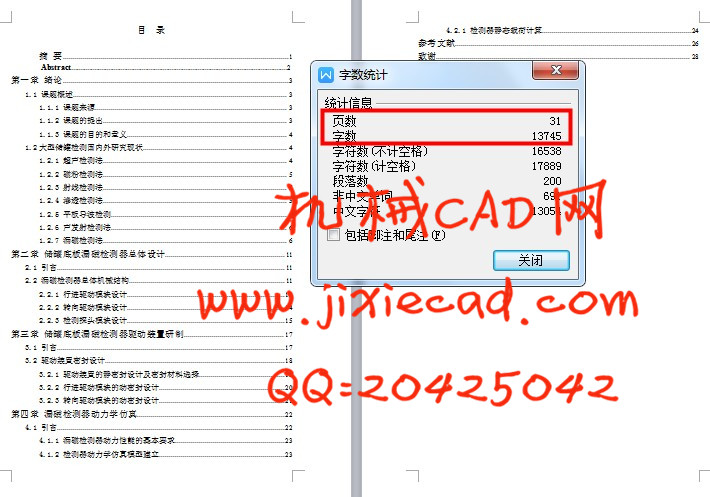
目 录
摘 要 1
Abstract2
第一章 绪论 3
1.1 课题概述 3
1.1.1 课题来源 3
1.1.2 课题的提出 3
1.1.3 课题的目的和意义 4
1.2大型储罐检测国内外研究现状 4
1.2.1 超声检测法 4
1.2.2 磁粉检测法 5
1.2.3 射线检测法 5
1.2.4 渗透检测法 5
1.2.5 平板导波检测 5
1.2.6 声发射检测法 6
1.2.7 漏磁检测法 6
第二章 储罐底板漏磁检测器总体设计 11
2.1 引言 11
2.2 漏磁检测器总体机械结构 11
2.2.1 行进驱动模块设计 12
2.2.2 转向驱动模块设计 14
2.2.3 检测探头模块设计 15
第三章 储罐底板漏磁检测器驱动装置研制 17
3.1 引言 17
3.2 驱动装置密封设计 18
3.2.1 驱动装置的静密封设计及密封材料选择 19
3.2.2 行进驱动模块的动密封设计 20
3.2.3 转向驱动模块的动密封设计 21
第四章 漏磁检测器动力学仿真 22
4.1 引言 22
4.1.1 漏磁检测器动力性能的基本要求 23
4.1.2 检测器动力学仿真模型建立 23
4.2.1 检测器静态载荷计算 24
参考文献 26
致谢 28