
设计简介
摘 要
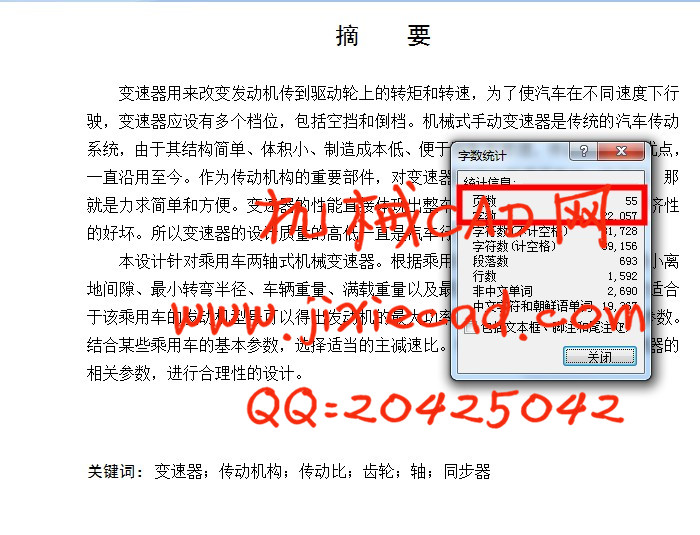
变速器用来改变发动机传到驱动轮上的转矩和转速,为了使汽车在不同速度下行驶,变速器应设有多个档位,包括空挡和倒档。机械式手动变速器是传统的汽车传动系统,由于其结构简单、体积小、制造成本低、便于装配和修理,传动效率高等优点,一直沿用至今。作为传动机构的重要部件,对变速器的设计都遵循着统一的目标,那就是力求简单和方便。变速器的性能直接体现出整车性能的高低,特别是燃油经济性的好坏。所以变速器的设计质量的高低一直是汽车行业竞争的焦点。
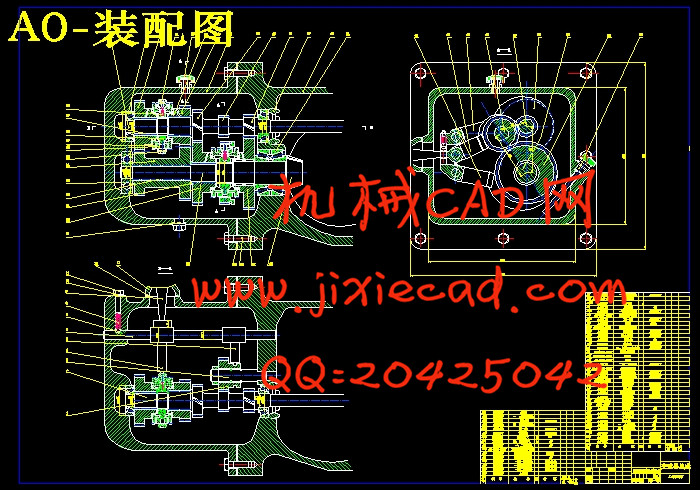
本设计针对乘用车两轴式机械变速器。根据乘用车的外形、轮距、轴距、最小离地间隙、最小转弯半径、车辆重量、满载重量以及最高车速等参数,结合选择的适合于该乘用车的发动机型号可以得出发动机的最大功率、最大扭矩、排量等重要的参数。结合某些乘用车的基本参数,选择适当的主减速比。根据上述参数,计算出变速器的相关参数,进行合理性的设计。
关键词:变速器;传动机构;传动比;齿轮;轴;同步器
ABSTRACT
To change the engine used to spread transmission of torque and wheel speed, in order to make car travel at different speeds, transmission should be a number of stalls, including neutral and reverse. Mechanical transmission is a traditional manual transmission car, because of its simple structure, small size, low manufacturing cost, ease of assembly and repair, high transmission efficiency, are still in use. Transmission mechanism as an impotant component, the design of transmission line with the goal of reunification, it is simple and convenient. Transmission performance of the vehicle directly reflects the level of performance, especially fuel economy is good or bad. Therefore, the design of transmission quality has been the focus of competition in the automotive industry.
The design for the two-axis mechanical transmission cars. Form the basis of passenger cars, Tread, wheelbase, minimum ground clearance, minimum turning radius, vehicle weight, loaded weight and parameters such as maximum speed, combined with the suitable selection of the cars engine engine models can be drawn maximum power, maximum torque, displacement and other important parameters. Combination of some basic parameters of passenger cars, to choose the appropriate reduction ratio of the Lord. Based on the above parameters to calculate the transmission of the relevant parameters for a reasonable design.
Key words:Transmission;Transmission mechanism; Transmission ratio;Gear;Axis;Synchronizer
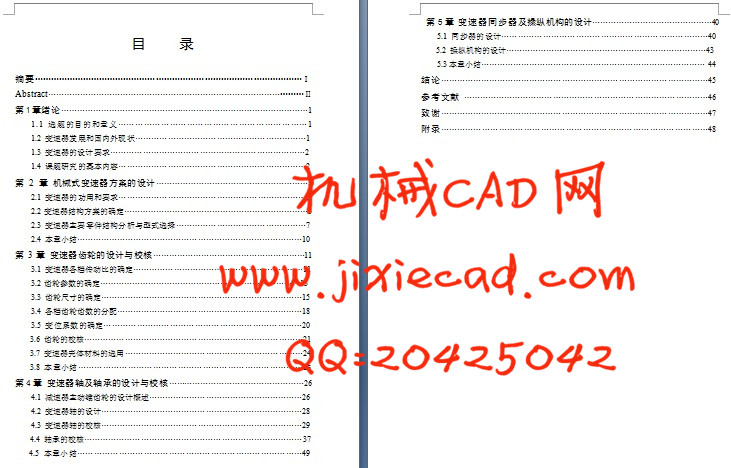
目 录
摘要………………………………………………………………………………………Ⅰ
Abstract……………………………………………………………………………………Ⅱ
第1章绪论…………………………………………………………………………………1
1.1 选题的目的和意义…………………………………………………………1
1.2 变速器发展和国内外现状………………………………………………………1
1.3 变速器的设计要求………………………………………………………………2
1.4 课题研究的基本内容……………………………………………………………2
第2章 机械式变速器方案的设计…………………………………………………3
2.1 变速器的功用和要求……………………………………………………………3
2.2变速器结构方案的确定……………………………………………………………3
2.3变速器主要零件结构分析与型式选择…………………………………………7
2.4本章小结…………………………………………………………………………10
第3章 变速器齿轮的设计与校核…………………………………………………11
3.1 变速器各档传动比的确定………………………………………………………11
3.2 齿轮参数的确定…………………………………………………………………13
3.3齿轮尺寸的确定…………………………………………………………………15
3.4 各档齿轮齿数的分配……………………………………………………………18
3.5 变位系数的确定………………………………………………………………20
3.6 齿轮的校核………………………………………………………………………21
3.7变速器壳体材料的选用…………………………………………………………24
3.8本章小结………………………………………………………………………25
第4章 变速器轴及轴承的设计与校核……………………………………………26
4.1减速器主动锥齿轮的设计概述…………………………………………………26
4.2变速器轴的设计…………………………………………………………………28
4.3变速器轴的校核…………………………………………………………………29
4.4轴承的校核………………………………………………………………………37
4.5本章小结………………………………………………………………………49
第5章 变速器同步器及操纵机构的设计………………………………………40
5.1 同步器的设计…………………………………………………………………40
5.2 操纵机构的设计…………………………………………………………………43
5.3本章小结………………………………………………………………………… 44
结论………………………………………………………………………………………45
参考文献 ………………………………………………………………………………46
致谢………………………………………………………………………………………47
变速器用来改变发动机传到驱动轮上的转矩和转速,为了使汽车在不同速度下行驶,变速器应设有多个档位,包括空挡和倒档。机械式手动变速器是传统的汽车传动系统,由于其结构简单、体积小、制造成本低、便于装配和修理,传动效率高等优点,一直沿用至今。作为传动机构的重要部件,对变速器的设计都遵循着统一的目标,那就是力求简单和方便。变速器的性能直接体现出整车性能的高低,特别是燃油经济性的好坏。所以变速器的设计质量的高低一直是汽车行业竞争的焦点。
本设计针对乘用车两轴式机械变速器。根据乘用车的外形、轮距、轴距、最小离地间隙、最小转弯半径、车辆重量、满载重量以及最高车速等参数,结合选择的适合于该乘用车的发动机型号可以得出发动机的最大功率、最大扭矩、排量等重要的参数。结合某些乘用车的基本参数,选择适当的主减速比。根据上述参数,计算出变速器的相关参数,进行合理性的设计。
关键词:变速器;传动机构;传动比;齿轮;轴;同步器
ABSTRACT
To change the engine used to spread transmission of torque and wheel speed, in order to make car travel at different speeds, transmission should be a number of stalls, including neutral and reverse. Mechanical transmission is a traditional manual transmission car, because of its simple structure, small size, low manufacturing cost, ease of assembly and repair, high transmission efficiency, are still in use. Transmission mechanism as an impotant component, the design of transmission line with the goal of reunification, it is simple and convenient. Transmission performance of the vehicle directly reflects the level of performance, especially fuel economy is good or bad. Therefore, the design of transmission quality has been the focus of competition in the automotive industry.
The design for the two-axis mechanical transmission cars. Form the basis of passenger cars, Tread, wheelbase, minimum ground clearance, minimum turning radius, vehicle weight, loaded weight and parameters such as maximum speed, combined with the suitable selection of the cars engine engine models can be drawn maximum power, maximum torque, displacement and other important parameters. Combination of some basic parameters of passenger cars, to choose the appropriate reduction ratio of the Lord. Based on the above parameters to calculate the transmission of the relevant parameters for a reasonable design.
Key words:Transmission;Transmission mechanism; Transmission ratio;Gear;Axis;Synchronizer
目 录
摘要………………………………………………………………………………………Ⅰ
Abstract……………………………………………………………………………………Ⅱ
第1章绪论…………………………………………………………………………………1
1.1 选题的目的和意义…………………………………………………………1
1.2 变速器发展和国内外现状………………………………………………………1
1.3 变速器的设计要求………………………………………………………………2
1.4 课题研究的基本内容……………………………………………………………2
第2章 机械式变速器方案的设计…………………………………………………3
2.1 变速器的功用和要求……………………………………………………………3
2.2变速器结构方案的确定……………………………………………………………3
2.3变速器主要零件结构分析与型式选择…………………………………………7
2.4本章小结…………………………………………………………………………10
第3章 变速器齿轮的设计与校核…………………………………………………11
3.1 变速器各档传动比的确定………………………………………………………11
3.2 齿轮参数的确定…………………………………………………………………13
3.3齿轮尺寸的确定…………………………………………………………………15
3.4 各档齿轮齿数的分配……………………………………………………………18
3.5 变位系数的确定………………………………………………………………20
3.6 齿轮的校核………………………………………………………………………21
3.7变速器壳体材料的选用…………………………………………………………24
3.8本章小结………………………………………………………………………25
第4章 变速器轴及轴承的设计与校核……………………………………………26
4.1减速器主动锥齿轮的设计概述…………………………………………………26
4.2变速器轴的设计…………………………………………………………………28
4.3变速器轴的校核…………………………………………………………………29
4.4轴承的校核………………………………………………………………………37
4.5本章小结………………………………………………………………………49
第5章 变速器同步器及操纵机构的设计………………………………………40
5.1 同步器的设计…………………………………………………………………40
5.2 操纵机构的设计…………………………………………………………………43
5.3本章小结………………………………………………………………………… 44
结论………………………………………………………………………………………45
参考文献 ………………………………………………………………………………46
致谢………………………………………………………………………………………47