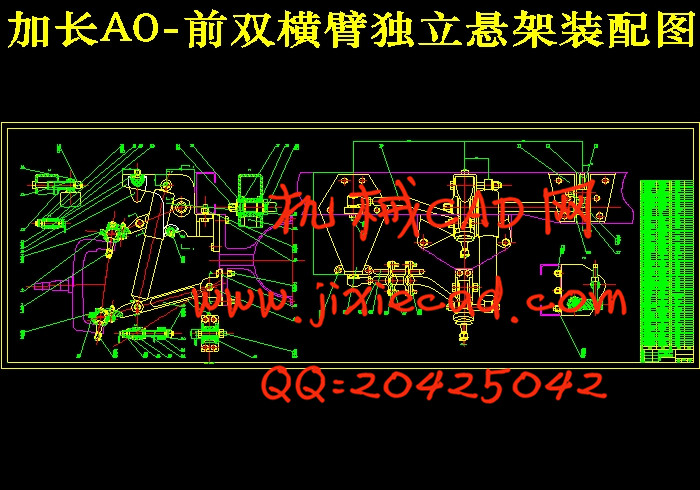


设计简介
中文摘要
BJ1042轻型载货汽车前悬架设计
随着汽车的逐渐普及,用户对汽车性能的要求越来越高,在获得良好的动力性和经济性的同时,还要求具有良好的操纵稳定性和行驶平顺性。传统的钢板弹簧式悬架已难以满足汽车行驶舒适性和操纵稳定性等方面提出的要求,因而在轻型载货车及轻型客车上推广使用独立悬架,尤其是双横臂独立悬架得到较大的发展。所以,研究双横臂独立悬架是非常必要的。
双横臂独立悬架的刚度和静挠度等参数对汽车的平顺性有很大影响,而导向机构的空间位置关系直接影响汽车的操作稳定性。因此,对双横臂独立悬架进行静力学和动力学分析是非常有必要的。
本论文在比较了多种静力学和运动学分析方法的基础上,决定采用以空间机构运动学分析理论进行计算分析。本文主要研究轻型货车前双横臂独立悬架的静力学和运动学特性的计算和分析方法,以及机构零件的工艺性分析。
首先,本文介绍了前轮定位参数的有关概念以及独立悬架导向机构运动特性对汽车性能的影响。然后给出了进行悬架静力学和运动学特性分析与计算时所需要的数学工具和有关结论。并且,给出了应用这些数学工具进行具体分析与计算的方法和步骤。
并且本文采用该算法对BJ1042前悬架进行了改进,将原来的钢板弹簧改为双横臂独立悬架并对其导向机构进行了静力学参数和运动特性参数计算, 并对计算结果和试验结果进行了对比分析。结果表明: 该算法可行、有效, 利用该方法指导设计可改进导向机构的运动特性。
关键词 车辆工程 双横臂独立悬架 导向机构 静力学 运动学
BJ1042轻型载货汽车前悬架设计
随着汽车的逐渐普及,用户对汽车性能的要求越来越高,在获得良好的动力性和经济性的同时,还要求具有良好的操纵稳定性和行驶平顺性。传统的钢板弹簧式悬架已难以满足汽车行驶舒适性和操纵稳定性等方面提出的要求,因而在轻型载货车及轻型客车上推广使用独立悬架,尤其是双横臂独立悬架得到较大的发展。所以,研究双横臂独立悬架是非常必要的。
双横臂独立悬架的刚度和静挠度等参数对汽车的平顺性有很大影响,而导向机构的空间位置关系直接影响汽车的操作稳定性。因此,对双横臂独立悬架进行静力学和动力学分析是非常有必要的。
本论文在比较了多种静力学和运动学分析方法的基础上,决定采用以空间机构运动学分析理论进行计算分析。本文主要研究轻型货车前双横臂独立悬架的静力学和运动学特性的计算和分析方法,以及机构零件的工艺性分析。
首先,本文介绍了前轮定位参数的有关概念以及独立悬架导向机构运动特性对汽车性能的影响。然后给出了进行悬架静力学和运动学特性分析与计算时所需要的数学工具和有关结论。并且,给出了应用这些数学工具进行具体分析与计算的方法和步骤。
并且本文采用该算法对BJ1042前悬架进行了改进,将原来的钢板弹簧改为双横臂独立悬架并对其导向机构进行了静力学参数和运动特性参数计算, 并对计算结果和试验结果进行了对比分析。结果表明: 该算法可行、有效, 利用该方法指导设计可改进导向机构的运动特性。
关键词 车辆工程 双横臂独立悬架 导向机构 静力学 运动学
外文摘要
Title The design of front suspension of BJ1042 light truck
Abstract
With the increasing popular use of automobiles, customers seek for better and better performance in autos. In addition to good dynamic and feul economic performance, good handling and stability are also requested. Traditional leaf spring suspensions can’t meet the need of both vehicle ride comfort and handling performance , so Independent Suspension is widely used in light pick-up truck and light passenger car, especially Double Wishbone Independent Suspensions are developed more quickly. For that, it’s very necessary to study Double Wishbone Independent Suspensions.
Double-wishbone independent suspension stiffness and static deflection, and other parameters on the car ride great, oriented agencies and the spatial relationships directly affect the stability of a vehicle's operation. Therefore, the double-wishbone independent suspension for static and dynamic analysis is very necessary.
This paper compares the number of static and kinematic analysis on the basis of decided to adopt the space agencies to kinematic analysis theory analysis This paper is mainly about the methods of the calculation and analysis of the static and kinematic characteristics of front independent suspension with double-wishbone of light vehicles.
First, the paper introduced some of the basic concepts of the suspension and the history and future of independent suspension’s development. Then introduced the concepts of the front wheel alignment parameters and the affect to the vehicle performancean, which is caused by the movement characteristics of the independent suspension’s guide mechanisms.
Then listed the required mathematical tools and relevant conclusions of the mechanical analysis and calculation of the suspension’s static and kinematic characteristics. Moreover, it also contains the methods and steps of the application of mathematical tool for a specific analysis and calculation.
And this paper, the algorithm BJ1042 front suspension has improved, the original leaf springs to two-arm independent suspension and guidance of their bodies and the static mechanical parameters of movement parameters, and the results and test results A comparative analysis. The result s show ed that the algorithm w as effective and feasible, and could be used to imp rove the guiding mechanism kinem a tic characteristics of a designed vehicle.
Keywords Vehicle Engineering Independent suspension with double-wishbone
目 录
第一章 绪 论 1Title The design of front suspension of BJ1042 light truck
Abstract
With the increasing popular use of automobiles, customers seek for better and better performance in autos. In addition to good dynamic and feul economic performance, good handling and stability are also requested. Traditional leaf spring suspensions can’t meet the need of both vehicle ride comfort and handling performance , so Independent Suspension is widely used in light pick-up truck and light passenger car, especially Double Wishbone Independent Suspensions are developed more quickly. For that, it’s very necessary to study Double Wishbone Independent Suspensions.
Double-wishbone independent suspension stiffness and static deflection, and other parameters on the car ride great, oriented agencies and the spatial relationships directly affect the stability of a vehicle's operation. Therefore, the double-wishbone independent suspension for static and dynamic analysis is very necessary.
This paper compares the number of static and kinematic analysis on the basis of decided to adopt the space agencies to kinematic analysis theory analysis This paper is mainly about the methods of the calculation and analysis of the static and kinematic characteristics of front independent suspension with double-wishbone of light vehicles.
First, the paper introduced some of the basic concepts of the suspension and the history and future of independent suspension’s development. Then introduced the concepts of the front wheel alignment parameters and the affect to the vehicle performancean, which is caused by the movement characteristics of the independent suspension’s guide mechanisms.
Then listed the required mathematical tools and relevant conclusions of the mechanical analysis and calculation of the suspension’s static and kinematic characteristics. Moreover, it also contains the methods and steps of the application of mathematical tool for a specific analysis and calculation.
And this paper, the algorithm BJ1042 front suspension has improved, the original leaf springs to two-arm independent suspension and guidance of their bodies and the static mechanical parameters of movement parameters, and the results and test results A comparative analysis. The result s show ed that the algorithm w as effective and feasible, and could be used to imp rove the guiding mechanism kinem a tic characteristics of a designed vehicle.
Keywords Vehicle Engineering Independent suspension with double-wishbone
目 录
第二章 设计任务和要求 7
2.1 设计任务和要求 7
2.1.1 设计任务 7
2.1.2 设计要求 7
2.2 设计主要内容 8
第三章 方案论证 9
3.1 悬架的作用和组成 9
3.1.1 悬架的作用 9
3.1.2 悬架的组成 9
3.1.3 悬架的设计要求 12
3.2 悬架的种类 13
3.2.1 非独立悬架 13
3.2.2 独立悬架 14
3.2.3 几种典型的独立悬架的特点 16
3. 3 双横臂独立悬架 18
3.3.1 按摆臂长度分类 18
3.3.2 按悬架中弹性元件分类 19
3. 4 前轮定位参数的作用及变化要求 23
3.4.1 外倾角 23
3.4.2 主销后倾角 24
3.4.3 主销内倾角 24
3.4.4 车轮前束 26
3. 5 悬架结构元素 27
3.5.1 双横臂独立悬架的特点 27
3.5.2 扭杆弹簧 27
3.5.3 上、下控制臂长度比值 29
第四章 双横臂独立悬架运动学分析以及车轮定位参数的计算 31
4.1 双横臂独立悬架运动学分析 31
4.1.1 空间机构学理论 31
4.1.2 双横臂独立悬架空间运动分析计算 36
4.2 双横臂独立悬架车轮定位参数的分析计算 42
第五章 悬架静力学的分析与计算 45
5. 1 悬架静力学分析计算 45
5.2 计算过程 50
5.2.1确定悬架的平衡位置 51
5.2.2求平衡位置时的各点坐标 53
5.2.3对悬架进行运动学特性分析计算 55
5.2.4 扭杆弹簧的刚度计算 55
5.2.5 扭杆强度计算 56
5.2.6对悬架进行静力学计算 57
第六章 扭杆弹簧的加工工艺 59
6.1 扭杆弹簧的制造 59
6.2 扭杆弹簧的检验 61
6.2.1 外观检查 62
6.2.2 尺寸检查 62
6.2.3 检验弹簧特性 62
6.2.4 硬度检验 62
结论 63
参考文献 64